ARES
An experimental VR thriller that used narrative attention and scenography to guide users through impossible-space natural locomotion.
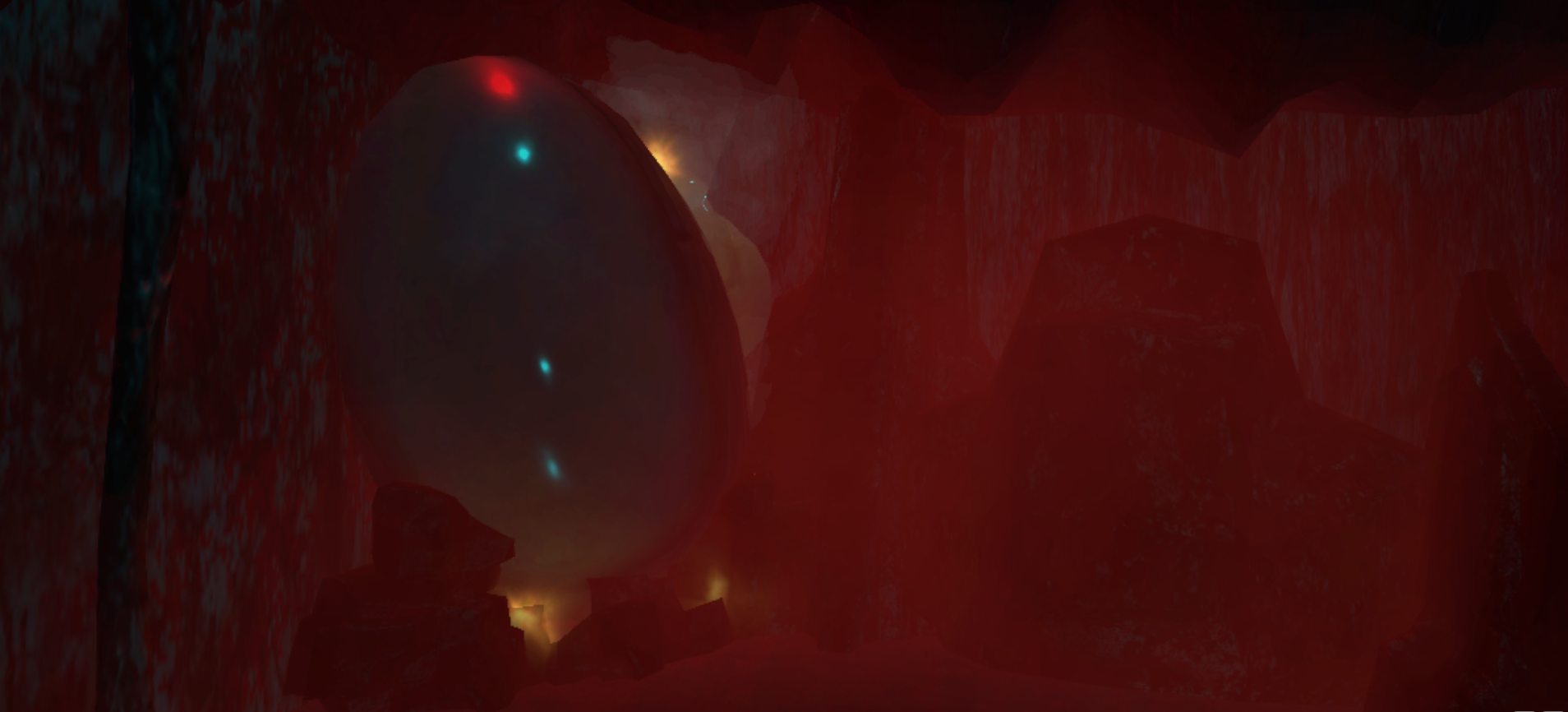
Room-scale VR offers natural walking, but the tracked physical space is much smaller than the story world.
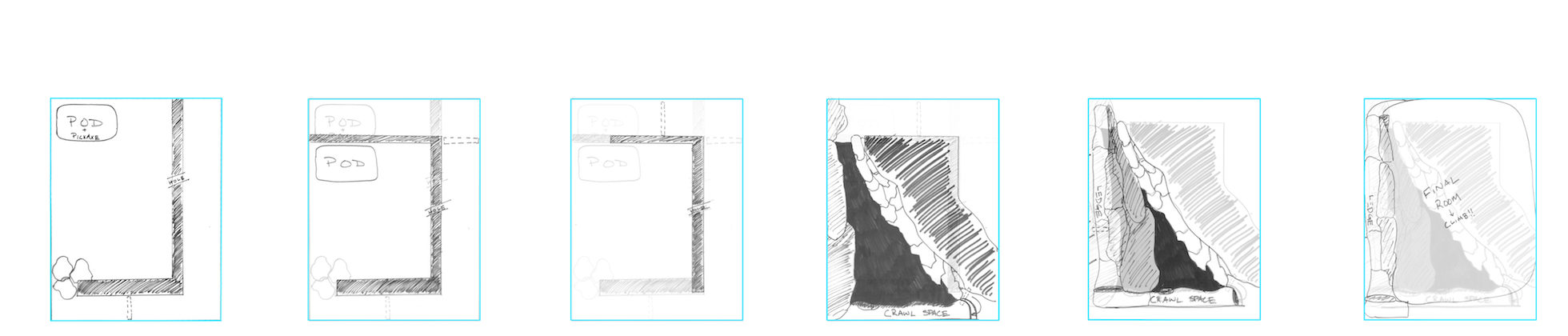
ARES emerged from a Georgia Tech course led by Janet Murray during the Oculus Pioneers period. Our team explored “impossible spaces”: virtual rooms that reuse and transform the same physical tracked area so that a user can keep walking naturally through an environment that appears much larger than the real room.
Narrative design, development, and VR interaction design within a collaborative student research team.
I worked as a game designer, developer, and VR UX designer within the ARES team under Janet Murray’s guidance. My specific research interest centered on using narrative direction and scenography to guide attention so that environmental changes could occur outside the participant’s focus.
My role
Game Designer · Developer · VR UX Designer. ARES was collaborative; I do not present it as a solo build. My contribution connected interactive narrative, spatial design, and the locomotion technique.
Narrative cues helped direct attention while the virtual architecture changed around the participant.
Instead of treating impossible-space locomotion as only a geometric problem, the project used dramatic pacing, sight lines, environmental framing, and narrative events to influence where users looked. That attention management created opportunities to reuse the same physical room for different virtual spaces without requiring teleportation as the primary movement model.
The project was tested with users and developed into a multi-publication research trajectory.
ARES was evaluated through user testing as part of the broader research program. The project was presented at CHI and IEEE VR, and the related Bauhaus scenography work further examined how virtual scenography shaped the experience and sense of presence.
The prototype in motion.
ARES became a testbed for locomotion, narrative attention, and scenography.
- CHI EA · 2017Garg, A., Fisher, J. A., Wang, W., & Singh, K. P. “ARES: An Application of Impossible Spaces for Natural Locomotion in VR.”
- IEEE VR · 2017Fisher, J. A., Garg, A., Singh, K. P., & Wang, W. “Designing Intentional Impossible Spaces in Virtual Reality Narratives: A Case Study.”
- Virtual Creativity · 2018Fisher, J. A. “Bauhaus Scenography for Virtual Reality.”