
VR Fleet Safety Training
Deployed 360° VR safety training for Waste Connections drivers with interactive overlays, performance analytics, and recurring organizational use.
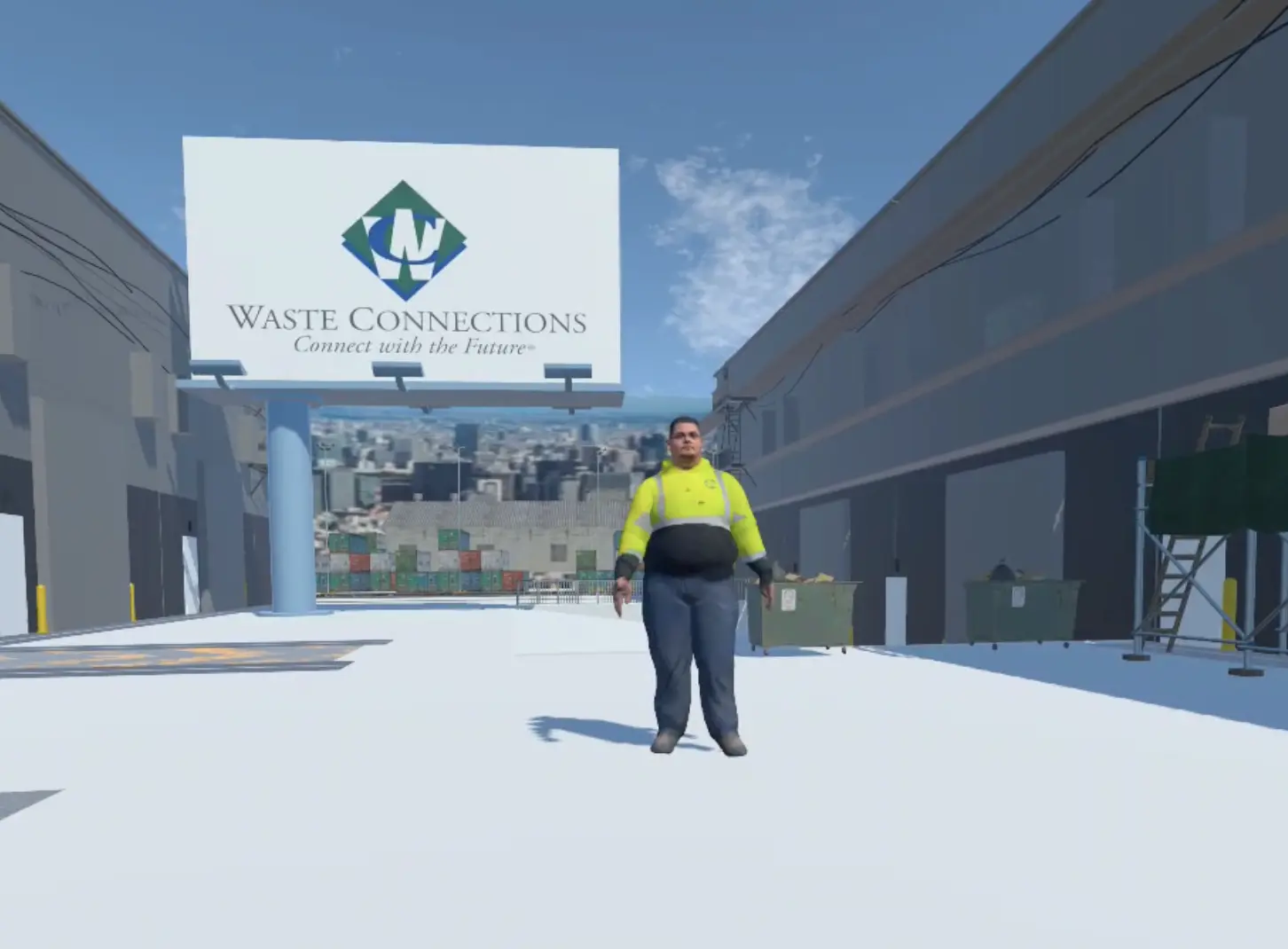
Garbage-truck drivers need to recognize hazards and rehearse judgment before those mistakes occur on the road.
Waste Connections sought an immersive training system for recurring driver-safety instruction. The design needed to place workers inside realistic 360° operational contexts while moving beyond passive video toward observable decisions, feedback, and performance tracking.
Production leadership and hands-on software/UX development.
I managed the project team, directed production, developed the software, designed the user experience, and managed usability testing with Waste Connections stakeholders and workers.
My role
Project Lead · UX Designer · Developer. I directed the production and team workflow while also implementing the interactive VR software, designing the training interaction model, and leading usability and refinement.
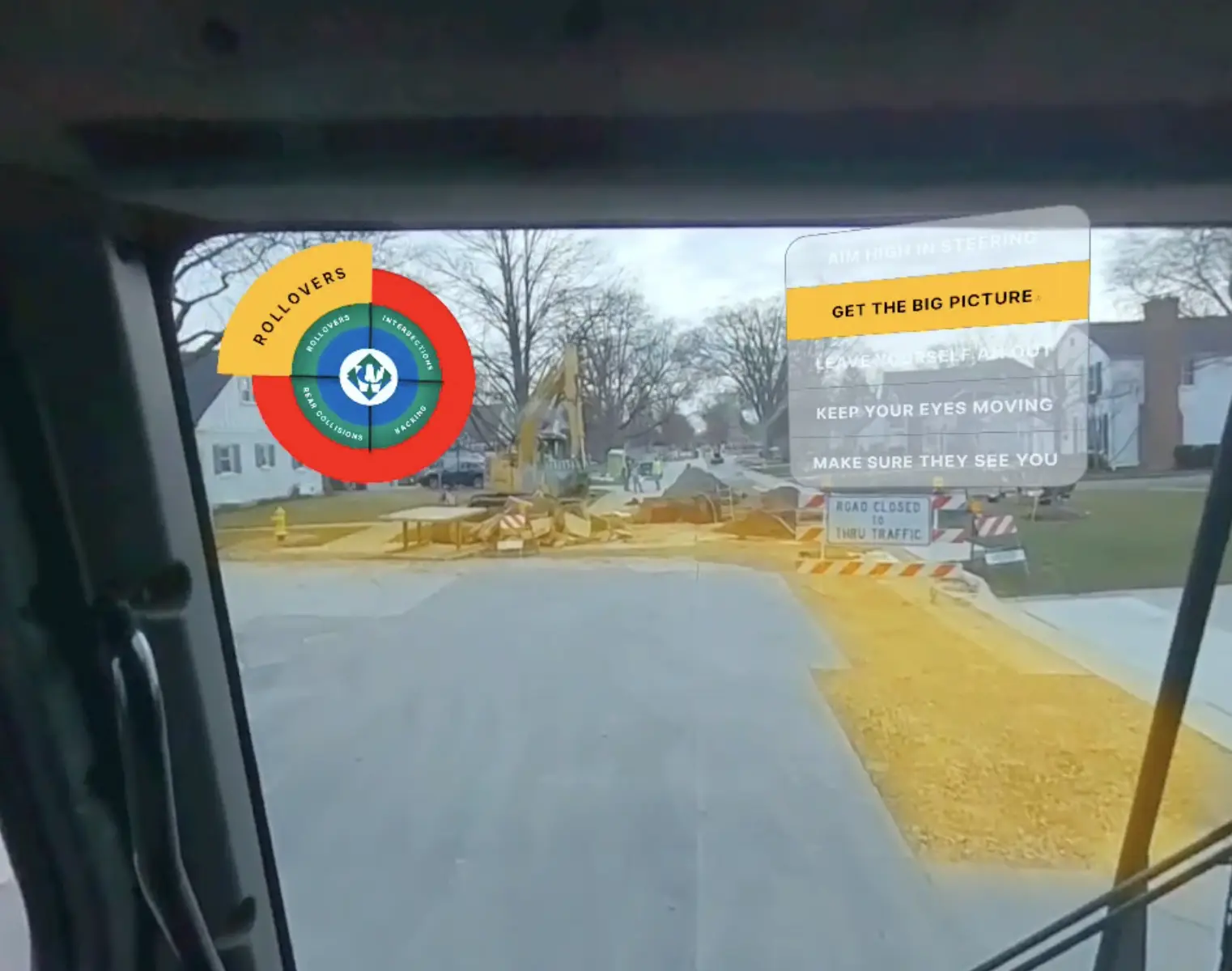
Interactive 360° video turned real-world driving contexts into trackable training scenarios.
The deployed system contains two primary training scenarios. Learners inspect 360° environments for hazards, make protocol judgments, answer in-context questions, and receive immediate feedback. Analytics and tracking record performance so the experience can function as part of a recurring training program rather than a one-off demonstration.
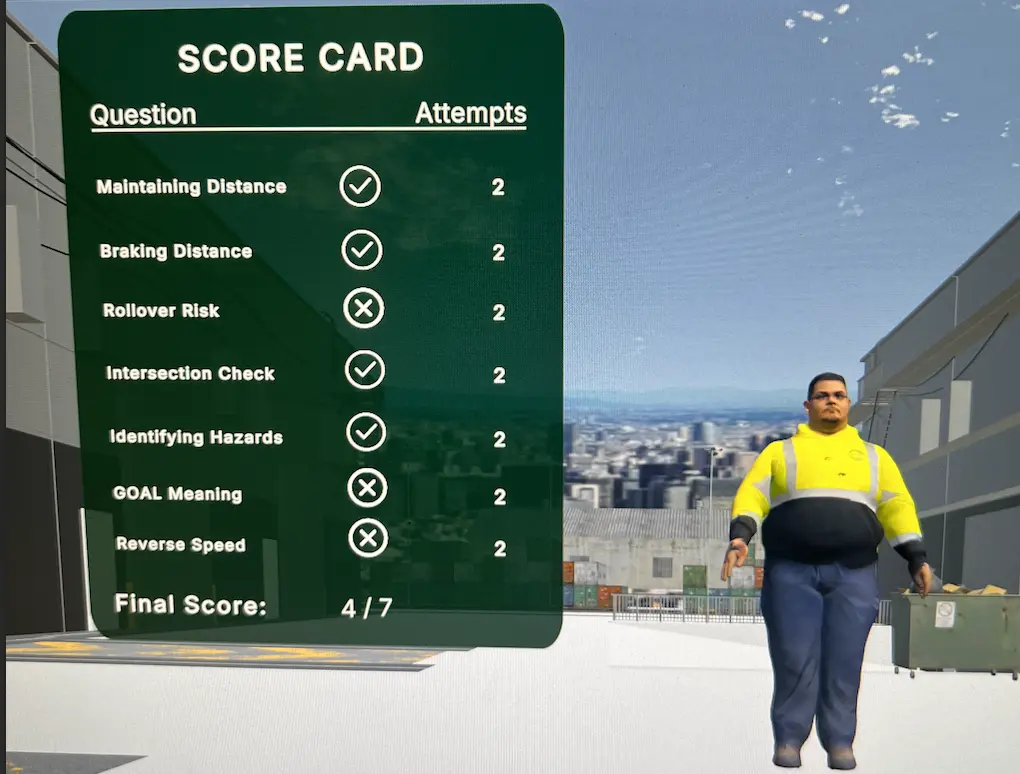
Twelve workers and stakeholders participated in design and testing.
Approximately 12 Waste Connections workers and stakeholders participated across requirements, usability, and refinement activities. Their feedback shaped how hazards were presented, how interactions were paced, and how the system fit into the organization’s existing safety-training routines.
The system moved from prototype to routine workforce use.
The project was deployed and remains part of regular Waste Connections training. That recurring use is the most important outcome: the interaction design had to work not only in a controlled demonstration but within an organizational training process with repeated learners, instructors, and performance data.
The project was supported by approximately $30,000 in external production funding from Waste Connections.